Richard Bartle is widely credited (along with Roy Trubshaw) with the creation of the worlds first virtual world, and his insights into current MMORPG developments are widely respected and derided in equal measure it would seem.
In this talk which was given at GDC Online 2010 last month, Prof. Bartle relates the thought processes that he thinks have been neglected in the development of todays MMORPGs and how he and Trubshaw made MUD.
A very enlightening talk about how MMO developers can recapture the immersion and expression which he found that he had created in MUD.
M out
Showing posts with label games. Show all posts
Showing posts with label games. Show all posts


18 Oct 2010
25 Years Ago Today...
...A little known company, famous only in the their home country for making playing cards, released a little white box of electronics which plugged into a television.
That company has been a world leader in videogame technology ever since. Releasing 5 home consoles and dominating the portable gaming market for decades, they have led the way in innovation and ingenuity (sometimes succeeding, sometimes not) and brought us some of the most memorable moments and characters in gaming's short history.
That company is Nintendo, and 25 years ago today they release their Nintendo Entertainment System (called the Famicom in Japan) and changed the world forever.
Happy birthday NES.
M out

That company has been a world leader in videogame technology ever since. Releasing 5 home consoles and dominating the portable gaming market for decades, they have led the way in innovation and ingenuity (sometimes succeeding, sometimes not) and brought us some of the most memorable moments and characters in gaming's short history.

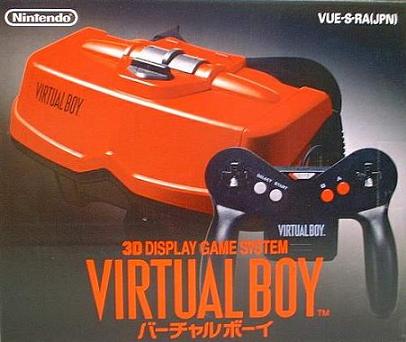


That company is Nintendo, and 25 years ago today they release their Nintendo Entertainment System (called the Famicom in Japan) and changed the world forever.
Happy birthday NES.
M out
17 Oct 2010
The Magic Number
I'm going to take inspiration from RPS for this weekly event, but with a twist, I will be scouring the internets in the intervening 7 days for articles that catch my eye. I will then bring you three of them that share a connection and list them in this post, whilst discussing their contents. Lets us begin.
11 Oct 2010
Razer giving away 1337 goodies
To commemorate getting a whole bunch of friends on Facebook Razer, makers of gaming peripherals are giving away a huge stash of loot.
This stash includes:
This stash includes:
- The winner's choice from Razer's range of gaming mice (of which I have a Diamondback and can honestly say I'm very impressed with it.)
- The winner's choice from Razer's range of gaming keyboards (none of which I have but I have heard good things about them)
- The winners choice of Razer gaming surface.
- A Razer Megalodon 7.1 Audio Headset
- A Razer Armadillo2 Mouse Cable Management System
- A Razer Messenger Bag
- A Razer Attitude T-shirt (I'm guessing you get to pick one or you get a random one)
- A Razer Gear Rack
- and a Razer 1337 pack (whatever that is)
Razer also have 1337 unspecified prizes to give out to those who sign up.
So click here to sign up now, and go like their Facebook page.
I have to say that whenever I've encountered Razer products I've always been impressed with the funtionality and build quality. I've had my Diamondback for a good long while and have not had any issues with it.
M out.
In the interests of full disclosure, if you sign up using the links above it increases my own chances of winning. That being said I wouldn't be promoting the contest if I didn't think the prize was worth it. May the best man win ;)
9 Oct 2010
Do Ya Like Big Robots?
Just a quick post to point you in the direction of http://big-robot.com. An indie games developer comprising Jim Rossingol ( games journalist and writer of RPS and PC Gamer fame, he also wrote quite a good book which I have yet to read), James Carey (who you may remember from projects such as RPS's Shotgunity project, but who otherwise doesn't seem to exist on the internet) and some other guy. Oh okay its Tom Betts, who apparently is a master of the arcane art of coding things.
According to the latest post, they are currently working on two projects, which is quite ambitious for a small, and relatively new indie dev. The first looks to be a sort of indie Sim City, though I sincerely hope its more than that, and the second is a more experimental affair through which big-robot will be playing with the Unity engine and figuring various stuff out.
I'll be keeping a weather eye on their progress and will gladly help out with playtesting (hint hint) anything they throw my way.
Its going to be interesting to see what a games writer comes up with in terms of games, one would hope that Jim's wide experience of the medium and outsiders eye will not be afraid to head off into waters unknown. We'll have to wait and see I suppose.
Good luck guys.
M out
which I have yet to read), James Carey (who you may remember from projects such as RPS's Shotgunity project, but who otherwise doesn't seem to exist on the internet) and some other guy. Oh okay its Tom Betts, who apparently is a master of the arcane art of coding things.According to the latest post, they are currently working on two projects, which is quite ambitious for a small, and relatively new indie dev. The first looks to be a sort of indie Sim City, though I sincerely hope its more than that, and the second is a more experimental affair through which big-robot will be playing with the Unity engine and figuring various stuff out.
I'll be keeping a weather eye on their progress and will gladly help out with playtesting (hint hint) anything they throw my way.
Its going to be interesting to see what a games writer comes up with in terms of games, one would hope that Jim's wide experience of the medium and outsiders eye will not be afraid to head off into waters unknown. We'll have to wait and see I suppose.
Good luck guys.
M out
7 Oct 2010
Rock Band 3 - Finally a Music Game For Real Musicians?
There was one thing which cause real guitarists and musicians to look down upon the peripheral based Guitar Hero and Rock Band games. They were just pretend. Whether this disdain came from resentment of the fact that any amount of skill with a real guitar could put you at a severe disadvantage when playing the games (a friend of mine who is a very good guitarist was rubbish at guitar hero) or simply a kind of artists snobbishness (an activity that made non-musicians feel talented for a lot less time and practice than 'proper' musicians) is up for debate. The simple fact is that the first generation of these games were just that, games.
6 Oct 2010
Tobold Scaling it Back
Tobold is notorious among gaming bloggers. Admired and derided in equal measure by those who read him.
I was sad to read today that he's scaling back his blogging activities. I have a great deal of respect for him as a blogger and while I don't always agree with his views (he doesn't like EVE and doesn't understand how people can find it fun) He generally has some interesting things to say about MMOs and his vision of the perfect one.
The latest series of posts from him and Nils regarding what makes a game 'good' , is exactly the kind of discussion that needs to be had, if only to dispel the notion that sales = quality and that there can be any kind of subjective measure of a game's 'goodness'.
He cites the reason for this down-shift in his blogging is that its all become so predictable. He gets the same commenters, making the same comments, on almost every post. To the point where he could write those comments themselves and properly attribute them to the right commenters. I would contend that by blogging about MMOs from the perspective of a WoW player he has left himself open to the e-peen waving of the gearscore whores, as that is basically what that game has become.
Games, especially virtual worlds, are about getting the players to tell themselves and each other engaging stories. If the only story you have to tell is that you've beaten an instance for the umpteenth time and only have to do it x more times to get this bit of awesome gear and then your score will be y. Yeah, its going to get boring.
He says in his post that he's going to play more and write less, well I would give him this piece of advice:
M out
I was sad to read today that he's scaling back his blogging activities. I have a great deal of respect for him as a blogger and while I don't always agree with his views (he doesn't like EVE and doesn't understand how people can find it fun) He generally has some interesting things to say about MMOs and his vision of the perfect one.
The latest series of posts from him and Nils regarding what makes a game 'good' , is exactly the kind of discussion that needs to be had, if only to dispel the notion that sales = quality and that there can be any kind of subjective measure of a game's 'goodness'.
He cites the reason for this down-shift in his blogging is that its all become so predictable. He gets the same commenters, making the same comments, on almost every post. To the point where he could write those comments themselves and properly attribute them to the right commenters. I would contend that by blogging about MMOs from the perspective of a WoW player he has left himself open to the e-peen waving of the gearscore whores, as that is basically what that game has become.
Games, especially virtual worlds, are about getting the players to tell themselves and each other engaging stories. If the only story you have to tell is that you've beaten an instance for the umpteenth time and only have to do it x more times to get this bit of awesome gear and then your score will be y. Yeah, its going to get boring.
He says in his post that he's going to play more and write less, well I would give him this piece of advice:
Play more, and play widely. Play everything that comes your way and go looking for anything that doesn't. Build a picture of the wider gaming landscape and get as many different perspectives of what a game could be as possible. Then maybe you'll have something that you feel is worth writing about."I'll still be following his blogging, its a shame there won't be as much of it as before though.
M out
4 Oct 2010
My Gaming Life
I thought it was about time I laid out my life in games for you, so you can get an idea of my experience of games and gaming and what I feel qualifies me as a credible source of gaming opinion and information.
My first experience of a video game, that I can remember is playing the Star Wars arcade game in the early '80s. Flying down that wireframe trench was one of the most exhilarating experiences of my then short life. Not long afterwards I received an Amstrad CPC 464 for Christmas and I've never looked back since.
I've always been a PC gamer at heart, from the days of my old 464 until the point at which my dad got an IBM 386 in the early '90s, my contact with consoles was limited to those of my school friends. While I loved the simple 'plug-n-play' aspect of the NES and Sega Master Systems, my first port of call for playing games has always been something with a keyboard (and eventually a mouse too). I bought my first console when the Sega Master System II was released and hardly played it, preferring to fiddle about with the Autoexec.bat of my dad's PC trying to get the latest demo to run from the coverdisc of magazines like PC Review and PC World.
When I moved to university I took an underpowered and monochrome laptop with me which was no use for playing games so I finally gave in and bought a PSX. Those were the heydays of Tekken and Metal Gear Solid and I shared many an enjoyable evening with my uni flatmates learning special moves and sneaking my way around government facilities. But, one of them had a PC and I took every opportunity I could to grab some time on it.
We had no internet at this point and only one PC so network play was nigh on impossible but many games of Worms were played and turn about was taken when playing games like Z and Quake. It wasn't until I left uni (having dropped out of a Chemical Engineering course, I realise now that I should have taken the Comp. Sci. place I had been offered) and returned to my parents house that I discovered the joy of an always on connection.
I've been pretty much permanently online for the last decade (apart form a few breaks here and there) and have watched gaming grow from something that is done alone in a study or bedroom, into something that can be done anywhere on almost any hardware.
In 2002 I landed a job that was, at the time, my dream job. Sales Assistant at GAME on my local high street. Yes I know its a menial and thankless job for little pay, but I was working with computer games. During my time at GAME I also started my first blog (long lost to the mists of the internet now) and wrote about whatever was in my head. In 2003 I discovered MMOs, and starting with Earth and Beyond (now defunct) made my first forays into a wider world (or worlds). I left Earth and Beyond not long before it was shut down, because I had found another sci-fi MMO to take its place; EVE Online.
During the six and a half years I've been playing EVE I have also been playing other games. I am not one of the many EVE players that restricts themselves to EVE and nothing else. I have owned (and still own) another 2 consoles in the shape of an Xbox and its offspring the 360. I may also own a PS3 at some point in the future, but that will be under duress and against my better judgement. I have played a variety of MMO games including (but not limited to) Planetside, Star Wars Galaxies, WoW, Aion, Guild Wars, Entropia Universe, Second Life, Auto Assault, Tabula Rasa, LoTRO, Everquest II, Free Realms, and City of Heroes. I've always had EVE going in the background though and it will be my first love.
In no way do I restrict myself to MMOs however. I try and keep abreast of the latest PC and console titles but gaming is an expensive hobby so I haven't managed to play everything that I've wanted to. The world of gaming is wide and varied, and there are so many games that no-one person can hope to play them all, and some of them you probably wouldn't want to anyway.
So here I sit, today, at my computer typing away and posting my thoughts on gaming for the world to read. I'm doing the two things that I enjoy the most; playing videogames and writing. I think about games a lot, I play games alot, and I hope to write about my thinking and playing on these pages in a way that is engaging, entertaining and informative. I'll concede that the majority of my audience are going to be gamers, but hopefully I'll be able to write so that non-gamers can gain some insight and understanding of the medium, as a counter to the misinformation often published by more mainstream media sources.
So stick around, leave the odd comment, and lets play.
M out
3 Oct 2010
Gamers Vs Ebert - A Fight No-one Can Win
It would seem the controversy surrounding Roger Ebert's assertion (which he sort of retracted) that videogames could not be art is still running. In the post, Mr. Ebert posts clip which a gamer, calling himself nofec, has cited as blowing movies out of the water and Mr Ebert responds with a clip of his own. I'll reproduce them here.
nofec's clip which features Okami on the PS2
Mr.Ebert's clip from Myazaki's anime My Neighbour Tortorro
As is my usual style, I went to write a short comment berating them both for continuing this ultimately pointless debate and it turned into an epic ramble. So, instead of hijacking Mr. Ebert's comments thread I'm going to post my response here instead and merely link to it in the comments of that post. So below find the comment I was going to make in full.
Mr Ebert and nofec,
Games are art, movies are art they're just different kinds of art.
There are things that movies can do that games can't, but equally there are things games can do that movies can't. Same with sculpture and literature and music, and drama etc. etc.
And nofec, thats no way to make an argument winning point. You start from the premise that the worth of the clip you link to will be self-evident to everyone (and without the context of interaction that is the heart of every game its pretty meaningless anyway.) This is a common mistake when arguing a point like this. The whole point about art is that what it is and isn't is entirely subjective. Nothing is ever self-evident, you're going to have to be more convincing with your argument. The same, however, could be said of Mr Ebert's clip. Must try harder, see me after class :P
Whatever artistic value each clip has is ultimately given to them by those that experience them (and I'm including the experience of making the art in the first place.) So saying "look at this isn't it awesome?" may be a great way to share your perception of an artwork (whatever form that work may take) but you shouldn't be surprised if every so often the reply comes back: "Meh, its OK I suppose but it does nothing for me."
I can see the art in both your clip and Mr Eberts (amazing film btw, my 4 yr old loves Miyazaki-san's work, as do I. And Okami is one of the few mainstream game titles that really does deserve to be called art, along with Ico and Shadow of the Colossus) but thats not going to help anyone, I can also discern the differences between the two mediums and why some people might not get either one.
From a critical standpoint you cannot say that one is better than the other, simply because they are so different. Its like saying that the sound of a violin tastes better than cerise. It just doesn't make any sense. So why don't you simply agree to disagree and admit to each other that there is value in both viewpoints? Continuing the debate is a pointless exercise as it is obvious that neither side is going to be convinced by the other. Let's just let it go eh?
There is also the risk that if either side wins (Games are never art and never will be art/Games are superior to film and always will be) the sum of human culture will be lessened by that victory? In my opinion the more different viewpoints there are of art and what it is (and there are approximately 6 billion and counting at the moment) the richer and more diverse our culture becomes. This is something to be treasured, to deny that is to make us out to be less than what we are.
It is not the place of games to blow movies out of the water, and neither is the reverse true. You both may perceive that they accomplish this (from your contrasting viewpoints of course) but it is not the purpose of either medium. Their purpose is simply to be, and add to the great melting pot that is our culture, teaching each of us about ourselves and the rest of humanity in their own ways and in ways that each of us will perceive differently.
M out
30 Sept 2010
Fare Thee Well, Mr Gillen
Those of you who don't know who Kieron Gillen is are probably not gamers. Today he announced his departure from the world of games journalism and it is a loss that will be felt by all who encountered him or his work. In response to his piece on his personal blog announcing this I have written the following. It was going to be a comment but I thought it deserved its own post.
29 Sept 2010
Dragon Age 2 Gameplay Footage - What Have They Done?
I caught this on twitter via @TheSocialGamer and I know its unfair to judge from the short glimpse we're given, and the commentary is in German (I think, its hard to tell) but it looks like they've turned Dragon Age into Dynasty Warriors. Not a good sign.
judge for yourself below:
Now I'm all for streamlining systems and making them more accessible, but unless the PC version of Dragon Age 2 is markedly different from the Xbox version (which is what we're seeing here) it certainly looks like they've turned it into a button masher. Bioware did so well with Mass effect 2, in that it iterated very nicely on the first game. Shaving off only those things which were necessary to smooth things out and making the combat more action oriented was a smart move in terms of pacing and excitement.
Dragon Age on the other hand was nigh on perfect. The combat was tactical enough to be challenging and actiony enough to be exciting. Take out the tactics and its all down to reaction times and hitting the buttons in the right sequence, you may as well be playing dance dance revolution.
I'm being a bit cynical about this though. the video has what? Thirty seconds of combat? This is probably not the best first look at it and I should probably give Bioware the benefit of the doubt. They've yet to produce a game that hasn't been great, don't let Dragon Age 2 be the combo breaker.
27 Sept 2010
IGI 2010 - Part III
Part I and Part II can be found by clicking the relevant links.
After our wonderful lunch (did I mention that it included whale meat? Yummy!) The next session was announced and we returned to our seats. The first session of the afternoon was entitled Game Design for the Future and kicked off with Torfi Frans Ólafsson, a Senior producer from CCP. His talk was called Virtual Reality beyond goggles and gloves.
Reaching abck into the mid nineties he reminded us what used to be meant by virtual reality:

It wasn't pretty or graceful and the graphics were a bit rubbish. The ideas were there but the technology was not up to realising them. Torfi also cited books such as Neuromancer and Snow Crash
 as giving a view of Virtual reality which was completely singular. Virtual reality has changed, it is no longer about wearing a bulky headset and walking around bumping into things. Virtual reality is now more about a shared online experience, using multiple means of access and doing many things at the same time.
It was imagined in these books, and by the creators of VR hardware that exploring a virtual world would be an experience that you would participate in whilst doing nothing else.The early VR visionaries had no conception of how modern computer users make use of their time online. For example, whilst writing this blog post, I have 11 other tabs open in my browser, and MSN messenger running in the background. If I were on my usual machine I'd probably be listening to the radio or watching a movie as well (2 monitors don't you know). Torfi's point was that experiencing a virtual environment is not a singular experience. We don't shop online by walking down a virtual 3d street looking in each virtual window as we pass, we open all of the websites we want to shop at simultaneously and compare the prices next to each other, whilst tweeting about it and filling in our Facebook status and chatting with our friends on MSN and watching a movie or the latest episode of Desperate Housewives (oh no, my dirty secret is out o.O). We are multitasking beings when we're online, I ofetn play EVE with 2 clients at once as do many others. Our virtual experiences are not what our forefathers imagined them to be.
Another difference between the idea of VR from decades ago and now is that the means by which such worlds are accessed are no longer singular either. In WoW you can play the auction house from your phone or a website without having to log into the main client. Guild Wars 2 is also building on multi-modal functionality with iPhone apps that let you track what your friends are doing in game when you are away from your computer. EVE has been multi-modal for a while through third party applications such as Aura and Capsuleer, and the launch of EVE Gate is only serving to extend that multi-modality more. CCP is also exploring other ways of actually affecting what happens in the game world directly with Dust 514, a console shooter set in the same universe as EVE and affecting the planets of that immense universe in an entirely different way. We can access Facebook and Twitter from our phones, having conversations with people who are using totally different equipment to access their accounts.
Virtual reality has become a shared experience rather than a representation of a physical place. Rather than reality being defined by the pixels you look at it has become something that you experience, whatever form that experience takes. Whatever reality is is pretty much all in our heads anyway, even in everyday life. Torfi summed up his thinking with the following diagram:

The next talk was from Jonathan Osborne from Gogogic, and covered some of the history of gaming from tennis for two all the way up to games like Mass Effect, Halo: Reach, and of course Vikings of Thule. His main point was that at the forefront of gaming, there are no guidebooks or maps fro where its going to lead next. Social and casual gaming will gain depth as more people become participation literate and games move down the Maslow Pyramid. Location based gaming may be the next big thing but there's no real way of knowing. One thing he was certain about is that games will interact more and more with reality as the technology to play them on becomes more and more ubiquitous.
One thing he higlighted, using the examples of the original Quake and Halo was the level of technical knowhow required to become a gamer has decreased considerably. When Quake was released it was only the technically savvy that could run it. Those with the best machines and the know-how required to get the most out of them played Quake, those without had a PS1. Now everyone with an Xbox or PS3 can play Quake-like games which are even more power hungry but less knowledge dependent. You don't need to know how to adjust your autoexec.bat so that the game runs, you just shove the disc in and away it goes. This lowering of the technical barriers to gaming has widened the market and consequently widened the tastes that the games industry has to cater to, leading to a highly diverse market where there is a niche for just about everything.
He also hinted at a new project from Gogogic which will be landing sometime next year and is currently named Rupture. No other details but I'll be keeping my eyes peeled.
The final talk of this session was from Deepa Lyengar of Mindgames, and was about making real brain training games which used the latest technology to teach people how to relax and/or concentrate. Starting with the perpetual problem of how to make educational games without them being overtly educational and divorcing them completely from the dreaded 'edutainment' moniker. Her argument is that games are already teaching us things, its just that the things they're teaching are not directly applicable outside of the game. Indeed, many are simply improving our hand-eye co-ordination and increasing our skill at that particular game. Mindgames' goal is to develop games which teach us how to do something that will have wider applications than simply being better at the game. They want to make games that teach us how to meditate.
Using the latest brainwave interfaces and an iPhone, Tug of Mind aims to teach people how to relax by letting them turn a photo of someone into an angry face and then, utilising the NeuroSky MindSet, change their brainwaves to make the face happy. Using the same positive feedback systems that many games use to teach you how to blow stuff up more accurately, Tug of Mind teaches you the skills necessary to relax in stressful situations. Describing their products as 'Games with benefits', Mingames are trying to avoid being lumped in with edutainment and serious games which are often made with education and training as the priority rather than being actually fun to play.
Deepa admitted that there are challenges to designing games for the new brainwave interfaces in that when you have a physical button you know almost instinctively what you have to do and it all boils down to how and when you hit the button. With their games the challenge is that there is no button (insert 'there is no spoon' reference here) and its quite hard to bridge the gap between the player's introspective experience and the external stimulus. But surely thats the point of the game, to teach the player to know their own mind and learn where their internal button is so they can press it whenever they want.
After a quick break for more coffee it was time for the final session, which was by far the driest and least upbeat of the day, dealing as it did with the current economic situation in Iceland and whether the country has what it takes to sustain such a vibrant and innovative gaming industry, the speakers were generally in agreement with regards to what was needed for Iceland to become a world leader in the gaming sector; political and economic stability. greater support for R&D, ease of immigration so that talent is not put off by the hassle of coming to live here, a top class educational system (which it by and large already has) and a less punitive tax regime. Two things that all the speakers agreed on in the Q&A afterwards was that for the Icelandic gaming industry to survive there cannot be another crash similar to the one that occurred at the end of 2008 and the restrictions on capital investment from abroad should be lessened somewhat if not lifted altogether.
And so on that fairly downbeat note, but with a hopeful closing address from Sigurlina Ingvarsdóttir of CCP we retired to the blue lagoon for a soak in the milky, mineral enriched, warm water. A relaxing end to a very stimulating and informative day, complete with blue cocktails.
All in all there are many reasons to be optimistic about gaming's future in Iceland. There are companies here which are poised to take advantage of the new technological landscape being laid before them and as one of the most connected countries in the world there are few places better placed to experimant and play with what that connectivity means. Iceland has seen some hard times in recent years, and is still seeing them now, but if they can weather this storm and come out the other side stronger and more determined to lead the field going into the 21st century, Iceland's games industry has an awful lot going for it.
My thanks are extended to CCP for providing me with the opportunity to attend and the IGI for putting on a great day for all concerned.
M out
More information about the IGI and further details about the organisation, speakers and their presentations can be found at http://icelandicgamingindustry.ning.com/
After our wonderful lunch (did I mention that it included whale meat? Yummy!) The next session was announced and we returned to our seats. The first session of the afternoon was entitled Game Design for the Future and kicked off with Torfi Frans Ólafsson, a Senior producer from CCP. His talk was called Virtual Reality beyond goggles and gloves.
Reaching abck into the mid nineties he reminded us what used to be meant by virtual reality:
It wasn't pretty or graceful and the graphics were a bit rubbish. The ideas were there but the technology was not up to realising them. Torfi also cited books such as Neuromancer
and Snow Crash as giving a view of Virtual reality which was completely singular. Virtual reality has changed, it is no longer about wearing a bulky headset and walking around bumping into things. Virtual reality is now more about a shared online experience, using multiple means of access and doing many things at the same time.It was imagined in these books, and by the creators of VR hardware that exploring a virtual world would be an experience that you would participate in whilst doing nothing else.The early VR visionaries had no conception of how modern computer users make use of their time online. For example, whilst writing this blog post, I have 11 other tabs open in my browser, and MSN messenger running in the background. If I were on my usual machine I'd probably be listening to the radio or watching a movie as well (2 monitors don't you know). Torfi's point was that experiencing a virtual environment is not a singular experience. We don't shop online by walking down a virtual 3d street looking in each virtual window as we pass, we open all of the websites we want to shop at simultaneously and compare the prices next to each other, whilst tweeting about it and filling in our Facebook status and chatting with our friends on MSN and watching a movie or the latest episode of Desperate Housewives (oh no, my dirty secret is out o.O). We are multitasking beings when we're online, I ofetn play EVE with 2 clients at once as do many others. Our virtual experiences are not what our forefathers imagined them to be.
Another difference between the idea of VR from decades ago and now is that the means by which such worlds are accessed are no longer singular either. In WoW you can play the auction house from your phone or a website without having to log into the main client. Guild Wars 2 is also building on multi-modal functionality with iPhone apps that let you track what your friends are doing in game when you are away from your computer. EVE has been multi-modal for a while through third party applications such as Aura and Capsuleer, and the launch of EVE Gate is only serving to extend that multi-modality more. CCP is also exploring other ways of actually affecting what happens in the game world directly with Dust 514, a console shooter set in the same universe as EVE and affecting the planets of that immense universe in an entirely different way. We can access Facebook and Twitter from our phones, having conversations with people who are using totally different equipment to access their accounts.
Virtual reality has become a shared experience rather than a representation of a physical place. Rather than reality being defined by the pixels you look at it has become something that you experience, whatever form that experience takes. Whatever reality is is pretty much all in our heads anyway, even in everyday life. Torfi summed up his thinking with the following diagram:
The next talk was from Jonathan Osborne from Gogogic, and covered some of the history of gaming from tennis for two all the way up to games like Mass Effect, Halo: Reach, and of course Vikings of Thule. His main point was that at the forefront of gaming, there are no guidebooks or maps fro where its going to lead next. Social and casual gaming will gain depth as more people become participation literate and games move down the Maslow Pyramid. Location based gaming may be the next big thing but there's no real way of knowing. One thing he was certain about is that games will interact more and more with reality as the technology to play them on becomes more and more ubiquitous.
One thing he higlighted, using the examples of the original Quake and Halo was the level of technical knowhow required to become a gamer has decreased considerably. When Quake was released it was only the technically savvy that could run it. Those with the best machines and the know-how required to get the most out of them played Quake, those without had a PS1. Now everyone with an Xbox or PS3 can play Quake-like games which are even more power hungry but less knowledge dependent. You don't need to know how to adjust your autoexec.bat so that the game runs, you just shove the disc in and away it goes. This lowering of the technical barriers to gaming has widened the market and consequently widened the tastes that the games industry has to cater to, leading to a highly diverse market where there is a niche for just about everything.
He also hinted at a new project from Gogogic which will be landing sometime next year and is currently named Rupture. No other details but I'll be keeping my eyes peeled.
The final talk of this session was from Deepa Lyengar of Mindgames, and was about making real brain training games which used the latest technology to teach people how to relax and/or concentrate. Starting with the perpetual problem of how to make educational games without them being overtly educational and divorcing them completely from the dreaded 'edutainment' moniker. Her argument is that games are already teaching us things, its just that the things they're teaching are not directly applicable outside of the game. Indeed, many are simply improving our hand-eye co-ordination and increasing our skill at that particular game. Mindgames' goal is to develop games which teach us how to do something that will have wider applications than simply being better at the game. They want to make games that teach us how to meditate.
Using the latest brainwave interfaces and an iPhone, Tug of Mind aims to teach people how to relax by letting them turn a photo of someone into an angry face and then, utilising the NeuroSky MindSet, change their brainwaves to make the face happy. Using the same positive feedback systems that many games use to teach you how to blow stuff up more accurately, Tug of Mind teaches you the skills necessary to relax in stressful situations. Describing their products as 'Games with benefits', Mingames are trying to avoid being lumped in with edutainment and serious games which are often made with education and training as the priority rather than being actually fun to play.
Deepa admitted that there are challenges to designing games for the new brainwave interfaces in that when you have a physical button you know almost instinctively what you have to do and it all boils down to how and when you hit the button. With their games the challenge is that there is no button (insert 'there is no spoon' reference here) and its quite hard to bridge the gap between the player's introspective experience and the external stimulus. But surely thats the point of the game, to teach the player to know their own mind and learn where their internal button is so they can press it whenever they want.
After a quick break for more coffee it was time for the final session, which was by far the driest and least upbeat of the day, dealing as it did with the current economic situation in Iceland and whether the country has what it takes to sustain such a vibrant and innovative gaming industry, the speakers were generally in agreement with regards to what was needed for Iceland to become a world leader in the gaming sector; political and economic stability. greater support for R&D, ease of immigration so that talent is not put off by the hassle of coming to live here, a top class educational system (which it by and large already has) and a less punitive tax regime. Two things that all the speakers agreed on in the Q&A afterwards was that for the Icelandic gaming industry to survive there cannot be another crash similar to the one that occurred at the end of 2008 and the restrictions on capital investment from abroad should be lessened somewhat if not lifted altogether.
And so on that fairly downbeat note, but with a hopeful closing address from Sigurlina Ingvarsdóttir of CCP we retired to the blue lagoon for a soak in the milky, mineral enriched, warm water. A relaxing end to a very stimulating and informative day, complete with blue cocktails.
All in all there are many reasons to be optimistic about gaming's future in Iceland. There are companies here which are poised to take advantage of the new technological landscape being laid before them and as one of the most connected countries in the world there are few places better placed to experimant and play with what that connectivity means. Iceland has seen some hard times in recent years, and is still seeing them now, but if they can weather this storm and come out the other side stronger and more determined to lead the field going into the 21st century, Iceland's games industry has an awful lot going for it.
My thanks are extended to CCP for providing me with the opportunity to attend and the IGI for putting on a great day for all concerned.
M out
More information about the IGI and further details about the organisation, speakers and their presentations can be found at http://icelandicgamingindustry.ning.com/
25 Sept 2010
Its Official (finally) WoD MMO does exist
As was expected the big reveal at White Wolf's Grand Masquerade in New Orleans last night was a teaser for the WoD MMO.
Information is still sparse save that to begin with it will be based on the setting from Vampire: The Masquerade (as opposed to the current Vampire: The Requiem) and will focus on the social and political aspects of the setting. Vampires only I'm afraid, but that was only to be expected, maybe if theres wnough interest the other facets of the WoD world will be added later one (my vote is for Mage, though that could be tricky to get right).
The only video available of the reveal, and indeed of the trailer itself is the following shakycam version, I'll post an official one as soon as it surfaces.
I've already had tweets from some saying that the choice of the Masquerade setting is a dealbreaker for them, and I personally am disappointed that the other races aren't part of the package. Then again there were always going to be nay-sayers no matter what White Wolf/CCP did. We should probably just be happy that it's being done at all.
I've been waiting for this announcement for some time, so you can bet I'll be keeping a close eye on things from here on.
*Thx to Ardwolf for getting the skinny on this whilst I was busy with other things,
M out
IGI 2010 - Part II
After coffee the next session was focussed on trends in digital entertainment consumption and how end users will access the products being made. The era of gaming being tied to a console or PC is coming to an end with more and more users accessing their digital entertainment through other devices such as smartphones or the new wave of tablets. These devices offer the opportunity to be always connected, to a network and thereby to your friends. Iceland is ideally placed to take advantage of this surge in connectivity as it is one of the most connected countries in the world. Cellphone coverage is unparalleled, even in the middle of nowhere, and a large majority of homes have a broadband internet connection. The barriers to entry into gaming are lowering in other ways to as was detailed in Andie Nordgren's (CCP) talk about participation literacy.
Participation literacy (PL), Andie explained, it the amount of know how required to get the most out of a game. Liking something on Facebook is an activity which has a low PL requirement, but its depth is correspondingly lacking and the rewards for participation so small as to be intangible. Conversely, something like EVE online has a high PL requirement but the depth of play available and the felling of involvement for the player are higher. As people learn how to participate, as opposed to simply passively consuming, their entertainment. the level of participation literacy in the populace will increase allowing beginners to move up the scale from liking things on facebook, to farmville, and ultimately to games like EVE. As consumers become more literate in how they can interact with their technology tastes will diversify and wider markets will be opened up.
Some interesting, but obvious, comparisons were made with more traditional forms of media, Andie having first hand knowledge of working with musicians and television producers, and it was put forward that the greatest barriers to bringing more interaction to these industries was the attitudes of those within them. Good television requires preparation and control, which is hard to achieve when an interactive element is added, and she found that some musicians, even those who were interested in where they could go with the emerging 'new media', were hostile to the idea of interactive and collaborative music creation tools.
I found myself wondering if it was even worth approaching these established forms of media and adding interactivity to them when it would be far easier to do the reverse, ie; take elements of the old and add them to the interactive world of the new. We have seen this done already with games like Guitar Hero and Rock Band where the bridge between gaming and music was not made by the music industry but by the gaming industry.
Finally Andie put forward the idea that the gaming industry would disappear, to be replaced instead by a kind of 'participation' industry where end users participated in the creation, selection and success of their enterntainment. The increased connectivity allowed by new technologies would be an enabling force in this evolution and as participation literacy increased more diverse forms would emerge allowing users to choose the depth and complexity of their experiences.
The second talk in this session was from Peter Warman of NewZoo, which collates and publishes market data from the games industry world wide, and ruminated on the movement of games down the Maslow Pyramid of needs. He put forward an idea complimentary to Andie's in that as games become more and more accessible and the technology more ubiquitous games will move down the pyramid, lowering barriers to entry and becoming part of our daily life.
Starting at the top of the pyramid, the traditional view of games has them as a luxury, a way for us to use our imagination and push ourselves to be better at the game. as games developed they started rewarding us for our achievements within them, to begin with the reward was being top of the high score table and besting our friends. This tapped into the next level of the pyramid and supplied our need for esteem, both that of others and our self-esteem. The new wave of social games moves gaming down to the next level as we connect with the people we play the games with, both in person and virtually. Or social needs are met by these games and we gain a sense of community and belonging from playing them.
As far as I can see, gaming is yet to appreciably meet our physiological or security needs, unless we start getting paid to play them (financial security, see below) and the new ways of interacting with our games (brainwaves, motion controls) keep us in better shape than simply lounging on the couch and playing them. The trend is there however and is visible in the figures. Gaming is no longer restricted to the couch or desk as mobile platforms allow us to play while out and about, whilst seeing to our physiological needs.
The final speaker of this session was Ville Miettinen from Finnish company Microtask who eplained what a microtask was and how they could be of use in a gaming context. A microtask, Ville explained, was a small amount of work which generally takes no more than a few seconds to complete and which earns the microworker a small fee fro completion. An example that he gave was the entering of data from handwritten forms so that they can be easily stored digitally. Another example of a microworking service is Amazon's Mechanical Turk. the type of task in the example, simply entering text into a form, was compared to the game Typing of the Dead, where the player kills zombies by typing words that appear on the screen, their damage and rate of fire determined by the speed at which they type. He summed up the benfits of microtasking in games by saying they could 'extract the intelligence of chinese gold/ISK farmers and sell it to Icelandic Vampires.' Ville also suggested that games companies should seek partnerships with those that have a need for microtasking an build the completion of these tasks into their games. Allowing players to either pay for their game time via such tasks or giving other bonuses and perks.
This is possibly an extreme example but the potential is there to see. There are risks however; if games are reduced to a series of obviously work like tasks which must be completed in order to play the game (or even pay for the game) there is a risk of the fun going away. The trick will be to hide the work-like aspects of the tasks and make completing them fun. In the Q&A session following the talks Andie pointed out that the priamry function of games and gaming ws to provide entertainment, not pay the player's bills. Using player's in-game activities to complete microtasks for payment, unless well disguised, could have a detrimental effect on the entertainment value of the game itself.
One concern brought up by a question from the audience was the development of virtual 'sweat-shops'. Unscrupulous people in the developing world may hire large numbers of the poor and needy to man computers all day completing microtasks whilst pocketing the lion's share of the income from the tasks themselves and paying the actual workers next to nothing.
As the second session ended and we broke for lunch (which included whale, a bit like beef but with a salty aftertaste) and I was left considering while the future may indeed be bright we should be wary of losing sight of what gaming is. It is about participation and interaction, and the fulfillment of certain needs, but above all it should be fun. As soon as playing a game becomes something that is a requirement and not a choice, for example using the playing of a game to pay everyday bills (apart form a few rare examples, of which I am one), it automatically loses some of the fun, which is what gaming is supposed to be about.
Continued in part III
IGI 2010 - Part I
I got an email at about 11:00pm on Thursday night from one of my many contacts at CCP asking if I wanted to go along to the first annual conference of the Icelandic Gaming Industry the following day. I debated briefly whether I should take up the offer, and then accepted. I went to bed immediately as it meant an earlier start than I was used to the next day.
In a country as small as Iceland, it may be surprising that its gaming industry is worthy of its own conference. The IGI has 8 member companies and employs hundreds of people, many of its member companies have been around for a while and are led by people with decades of experience in the video games industry globally. Due to the nature of their home market, Icelandic games companies have to be global companies out of necessity and many have proven their success in competing worldwide and have offices all over the place.
I woke up at 7am the next morning, grabbed a coffee and set off to walk to CCP's office to get the bus at 8:30. With Opeth playing in my mp3 player I contemplated what lay ahead for the day and wondered what the IGI's plans were to help its members weather the aftermath of the economic collapse of 2008. The title of the conference was "The Future is Bright" but it was hard to see from my point of view. I have first hand experience of how hard it is in Iceland at the moment, and thats just for me. Unemployment is at record levels and the government is in turmoil. Taxes are rising to punitive levels (and set to increase further next year) and the restrictions on the Icelandic Kronur and Capital control regulations are frightening away foreign investment. The future looks far from bright, or so I thought on my way to CCP.
The IGI was founded last year as a way for local games companies to offer each other support and to provide a unified voice to bring their concerns and desires to the Icelandic government. It also exists in order to promote Icelandic gaming companies worldwide, in terms of attracting global talent and promoting their products and services in a large and highly competitive market.
There is probably only one country in the world where an industry conference has the optional dress code of bathing suit, this is Iceland after all, they do things differently here. The conference itself was being held at The Blue Lagoon, a well known tourist attraction outside of Reykjavik where hot water from a nearby geothermal power plant is filtered and cooled somewhat before being piped into an outdoor bathing pool. You'll have seen pictures of it no doubt; a steaming lagoon of bright blue water with the towers of the powerplant in the background. So with bathing suit and towel in my rucksack I got on the bus and we set off for the conference location.
The membership of the IGI comes from a wide variety of sectors of the global gaming market. CCP is a world leader in the MMO market, with EVE online bringing 300k+ subscribers together in a detailed virtual world, all on one shard and another MMO based on the World of Darkness setting in the works.. Gogogic is a maker of games for the casual and social markets and has seen success with its Vikings of Thule Facebook game. Betware is a company specializing in providing games and support software to the online and offline gambling industries. Mindgames is focussed on making use of the latest brainwave interfaces in order to teach people how to relax or improve concentration. The companies that make up the IGI are all focussed on innovating in newer fields of the gaming industry, spreading games beyond their perceived niche of techy PC users and hardcore console gamers.
We arrived at the venue, more coffee was consumed and pleasantries exchanged in the few minutes available before the conference kicked off with an introduction from Orri Harđarson of the federation of Icelandic Industries. The conference was organised into a series of talks interspersed with Q&A panels. The keynotes were first and opened with a presentation from Pablos Holman of Intellectual Ventures Laboratory. IVL is a pure R&D company which looks at a wide range of technologies and how they can be applied and re-purposed in a wide variety of fields.
During his presentation Pablos came across as an anarchic and playful individual who looked at technology with the perspective of "what can I make this do?" rather than that of the standard "what does this do?". He extolled the virtues of not only thinking outside the box, but also taking the box to bits and making something new from the pieces. he showed off some of the wild ideas that IVL has been coming up with including a mosquito zapping laser system, a nuclear reactor which runs on nuclear waste, and a machine for dampening the force of hurricanes. He imagined a world where the technology in our pockets made gaming and play available everywhere we went and as part of our everyday activities. The question raised was how can we use existing technologies in new and interesting ways to drive the rise of ubiquitous gaming.
The second keynote was given by Jason Della Rocca of Perimeter Partners who offer strategic level consulting services to the gaming industry. He covered an awful lot of ground in his presentation and illustrated how the era of horsepower driven gaming technology was coming to an end to be replaced by other forces like how we interact with games and the social gaming scene. He also predicted the gamification of our world as the distinction between 'gamers' and 'non-gamers' breaks down and becomes meaningless. A warning was implied in this; that we should avoid the gamepocalypse predicted by Jesse Schell earlier this year where every activity has an achievement or score attached to it and our every action becomes a point at which we can be marketed something.
The Keynotes over it was time for more coffee (which the games industry seems to run on) and a quick cigarette out by the opaque blue pools of the lagoon. I contemplated some of what had been said and wondered where our technology would take us next. The future is full of promise and possibilities which the visioanries of the Icelandic games companies seem to be exploring. With their platform independent games which an be played anywhere they seem to have already made inroads into the next evolution of game development.
Continued in part II
M out
23 Sept 2010
Welcome to the Masquerade
White Wolf Games is holding their Grand Masquerade in New Orleans this weekend and promises to reveal something momentous about the future of their World of Darkness Roleplaying game.
I first came across WoD about 15 years ago when the Magic: the Gathering craze swept through our local Wargaming/RPG club. One of our number twigged on to Rage, the CCG spun from the Werewolf RPG. This led me to Vampire, Mage, Wraith and all the other White Wolf Games. I never found the opportunity to play with the Storyteller rules in the WoD setting, I did however play an adaptation of the Cthullu Mythos using the Storyteller rules.
I kind of lost touch with the WoD setting over the last few years (I still have my original Mage and Wraith rulebooks though and dip into them occasionally) but the news a few years ago that CCP, the makers of EVE Online, and White Wolf were merging made me think of the possibilities.
I Imagined an open, sandbox style, socially driven MMO based on the WoD setting. A virtual world with the economic and political depth of EVE but with a 'modern gothic' setting. Is this what will be announced at the Masquerade?
The original WoD ruleset (I've not really read the new one) was less about heavy number crunching than about telling a good story. Gone were DnD's heavy reliance on tables and statistics and instead the GM was and players were given more freedom in order to build compelling narratives. Whether this free form style of gameplay will translate well to an MMO is something that is yet to be seen. Judging from CCP's record with EVE, where a lot of the gameplay and narrative is not hard-coded in but exists in a flexible social gamespace where there literally are no hard and fast rules, they are the company to bring the Storyteller system to the often numbers heavy realm of the MMO.
Its been a few years since the first hints of a WoD MMO were dropped at CCP's annual EVE Online Fanfest in 2006 and only 18 months since full scale development of the WoD MMO started (according to wikipedia that is, information about the game from CCP/White Wolf has been very thin on the ground) and its about time something was announced.
WoD has a huge fanbase worldwide, with Vampire: The Requiem being the most popular of the three core rulesets (the others being Werewolf: The Forsaken and Mage: The Awakening) and includes a large LARPing community. This fanbase, however, is not the same as those who follow the twinkly teen fiction of Twilight. I have faith that CCP/White Wolf will not succumb to the easy road of twinklifying their IP to appeal to this new flock of vampire fanatics, and will also keep the intrigues and social engineering aspects of the WoD setting intact. Anything less may very well be seen as a kind of betrayal by the existing fans of the WoD setting.
The future of WoD will be revealed to all at the Grand Masquerade in less than 36 hours. I for one can't wait, and personally wish I was there.
M out
For more information and regular updates follow @eddyfate or visit his blog.
22 Sept 2010
Rumours of GOG's Demise...
It seems I was somewhat premature in my burial of Good Old Games, they're holding a press conference this evening (6pm CET) to explain what is going on. I await the outcome with baited breath.
Update: GOG.com being taken down was a publicity stunt. It got a bit of a mixed reception.
Fine, if you're updating your website, expanding your service, and coming out of Beta, make a song and dance about it by all means. But, and here's where I agree with Scott Jennings (formerly Lum the Mad), Do not take your site down for 5 days with no explanation and with no way to provide paying customers with the items that they paid for.
It highlights the elephant in the room of many of the digital distribution services, namely that if they disappear overnight then you lose access to your games (ofc GOG does let you download DRM free copies of the games so you can make as many 'backups' as you feel is necessary, but thats beside the point.) If Valve were to vanish overnight, taking Steam with them, then all us Steam users would be shit out of luck with no way to play the games that we have paid for.
OK, on a limited marketing budget they have managed to generate quiet alot of publicity, but there is such a thing as bad publicity. and as I state above this is not just bad publicity for GOG but for all those engaged in legitimate digital distribution of games. Way to take a step backwards boys.
M out.
20 Sept 2010
Yep, More Minecraft.
I've wirtten about Minecraft already, but thought I had to share this trailer (fan-made of course). It captures the game perfectly.
IMO Notch should post this as the video on the Minecraft.net homepage (when its back up and running properly)
H/T Kotaku
IMO Notch should post this as the video on the Minecraft.net homepage (when its back up and running properly)
H/T Kotaku
19 Sept 2010
Good Old Games No More.
It is a sad day. I hear from PCGamer's twitter that Good Old Games is no more. They have shut down their website and will no longer be serving classic games without DRM to those of us who remember the classics of PC gaming. I would list some of the titles that they had available over their service but as the website is down I can't remember them off the top of my head, I must be getting old.
The message at GOG.com hints at future projects but the GOG name is no more. The message also says that those who have previously bought games from them will be given a way to re-download them in the near future.
M out
The message at GOG.com hints at future projects but the GOG name is no more. The message also says that those who have previously bought games from them will be given a way to re-download them in the near future.
M out
18 Sept 2010
So, This Minecraft Thing...
It might seem that I'm a bit late to the party with this, but I can assure you that I bought Minecraft a few weeks ago and was happily digging and building until my computer stopped working*. The laptop I'm using at the moment is not capable of running Minecraft in a playable fashion, I'm missing it.
Thankfully Rock, Paper, Shotgun, and Penny Arcade have picked up the ball, and I can keep abreast of developments on Notch's own blog.
Minecraft is a Java based game that seems to defy any sort of pigeon-holing. Its played from a first person perspective but its not an FPS. You can construct any edifice you like but its not a city builder (a la Sim City). There's crafting, but its not an MMO, there are dungeons but its not an RPG. Minecraft is a strange beast and has more in common with Dwarf Fortress than any other game, instead of being in control of a settlement of dwarves though you are an individual. It is a sandbox in the truest sense of the word, and it may very well be the first true sandbox in existence.
You start with nothing, literally. Absolutely nothing. From these meager beginnings you have the means to get everything else. If you want wood, go and hit a tree. With this wood you can craft planks, from planks you can craft a crafting table which opens up more crafting options to you with its larger crafting grid. You can now make sticks, essential in the construction of tools which allow you to harvest other materials such as stone, coal, iron and eventually diamonds.
The freedom of movement is unparalleled as well. Once you have a spade (wooden ones don't last long, stone lasts longer, iron longer still and diamond the longest of all) you can dig down, or horizontally in any direction. The practically infinite world (surface area of approximately eight whole Earths) is explorable in every direction. With enough stone you can build a tower to the top of the sky. With enough patience you can dig down to the bottom layer of adminium (beyond which lies the void). Or you can wander the surface and take in the amazing scenery.
You can also choose to do this in peace without the nightly invasion of zombies and skeletons, or allow such incursions to curtail your nighttime activities through the use of 4 different difficulty settings (peaceful, easy, normal, or hard), or you can join one of the many servers which are springing up all over. These multiplayer servers are places where players can work together to create truly monumental constructions or greif each other into oblivion. A Minecraft sport has already been developed called Spleef, which involves players attempting to drop each other into either water or lave by removing the blocks beneath their feet in a specially constructed arena. For a better idea of what is achievable in multiplayer Minecraft its a good idea to watch the various videos on the homepage (and click a few random ones too, I discovered some gems because my 4 year old has the attention span of well, a four year old).
The really amazing thing about Mincraft though is not the sheer freedom available to you, or the endearingly simple graphical style, its the fact that it is not finished yet! Indeed it is still in alpha. Updates (until recently, see below) have been pretty much weekly, with new features and crafting recipes being added continually. Last weeks addition brought us a craftable compass so we could explore freely without getting lost. Only Notch himself knows where the game is going to end up in its finished state, but he is at least willing to be guided by the growing community with regards to features and additions to the game. Personally I'd like to see a kind of meta-game developed for Minecraft which allows for trade and the transfer of character's inventories between the participating servers but that's just me others have much more in depth ideas and they're worth having a look at on the official Minecraft Forums.
Notch, the one man show who started programming Minecraft as a hobby about 18 months ago, made it a full time career about 9 months ago, and is now hiring staff and starting up a game development company (lots of meetings hence less development time) with the proceeds of what started out as a hobby. As a lifelong gamer who has perpetually aspired to do something just as creative and profitable as this, my hat is well and truly off to him.
Minecraft can be acquired for 10 euros and this gives you access to all the future updates for free and unlimited downloads and installations. Lets support Notch as he grows this game into something truly original and groundbreaking (pun intended) which we haven't seen since Love.
*It might be my PSU which is a simple fix, or it could be my MoBo, which isn't. and would basically mean a new computer (apart from monitors thankfully, as I have those) hence the inclusion of a button on the right there through which donations may be made. (alternatively you can click some of the google ads if you don't want to donate directly).
Subscribe to:
Posts (Atom)